How a Rust solo with 14,782 hours survives official servers in 2026
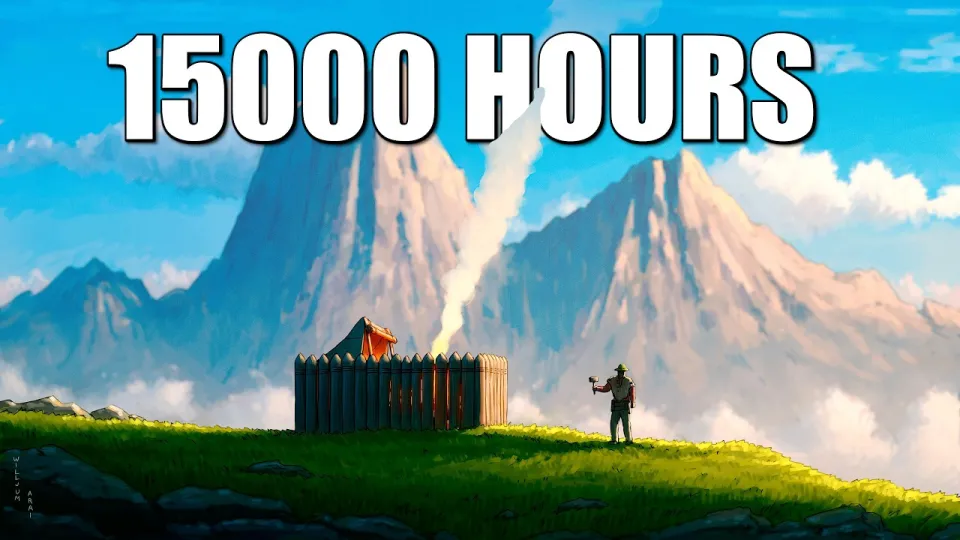
Video: How a solo with 14,782 Hours plays official rust...
You can order the same kind of articles for your own video to boost it on YouTube and Google. Just message the Telegram bot @sat_sit_bot. Articles with your video embedded are written and posted by the bot itself — on popular topical sites (no ads). Free trial — 50 articles.
· based on the channel Willjum
Key takeaways
- Willjum's account shows 14,782 hours of Rust, roughly 1,180 hours per year if played since early access in 2013.
- The run is a solo wipe on official Rust servers, the unmodded environment with the harshest competition and no team backup.
- The base build in the video comes from creator Luca Builds and uses a mannequin in the window as a decoy.
- Willjum's own community servers run monthly casual duos, solo-only Thursdays and 1.5x-3x trio schedules on EU and NA hosts.
- A recurring joke in the comments is that a player who hears footsteps at 50 yards still gets ambushed by a bear.
A Rust solo with 14,782 hours plays official servers by treating survival as a routine rather than a gamble: early, low-profile base placement, strict scrap budgeting, and fights only when the odds or the loot justify them. Willjum's solo run shows how that routine looks in practice on unmodded official Rust, where there is no team to cover a mistake and every lost kit is a real setback. The video is also sponsored by Manscaped, and the Willjum discount page carries 15% off plus free shipping with code WILLJUM15 on the Beard Hedger Plus.
What 14,782 hours actually means in Rust
14,782 hours is not a number most players can relate to, and the arithmetic explains why. Spread across Rust's early access launch in 2013, it works out to roughly 1,180 hours per year for about twelve and a half years; if you count only from the 2018 full release, it climbs to around 1,850 hours annually, close to a full-time job's 2,000-hour year. For context, a part-time worker logging 1,100 hours a year would need more than thirteen years to match it.
That volume of play does not translate into flashy aim. It translates into pattern recognition: knowing which monuments get contested at which point of a wipe, how long a raid usually takes to arrive after a base is spotted, and when a server's population curve makes a fight likely. In Rust, the practical difference between a 500-hour player and a 14,000-hour player is usually decisions, not reflexes.
How a solo survives on official Rust servers
Official servers are the least forgiving environment in Rust: vanilla gather rates, no admin intervention, and groups that can field four or five players against one. A solo's advantage is anonymity and speed, and the routine below reflects that.
- Build small and boring. A compact base with stone or metal core, an airlock, and no obvious loot room draws far less attention than a multi-tower compound. On official, being overlooked is a defense stat.
- Farm scrap before gear. Scrap is the real currency of early Rust. Prioritize a workbench, blueprints and a research table over a vanity kit; a nail gun you can remake beats a rifle you cannot.
- Use decoys. In the video, a mannequin placed in a window is used to draw fire and mislead attackers about where a defender is standing. Cheap, disposable distractions buy seconds, and seconds are what a solo has instead of teammates.
- Pick fights you can leave. A solo who commits to a long fight invites third parties. Hit, take what you can carry, and reposition.
- Keep a fallback stash. A small secondary base or a hidden box means one raid does not end the wipe.
The base build and the mannequin trick
The base in the run comes from creator Luca Builds, and the design leans on misdirection rather than raw strength. The mannequin in the window is the standout detail: from outside, a silhouette in a window reads as a defender holding an angle, so raiders and roaming groups spend ammunition and attention on a static object while the actual player moves elsewhere.
For solos, this kind of psychological layer matters more than wall thickness. A base that looks occupied and defended is less attractive than an empty-looking one, and a base that looks like a trap is less attractive still. Small touches — a lit furnace, a door left ajar, a decoy in a window — cost almost nothing and change how attackers approach.
Scrap discipline and the weapon economy
One of the running jokes around Willjum's content is the gap between what he says and what he crafts: announcing a preference not to spend scrap on weapons while producing yet another nail gun. The joke points at a real principle. On official Rust, scrap spent on a weapon you lose in ten minutes is scrap not spent on a workbench tier, blueprints or a research table that pays out for the rest of the wipe.
A workable priority order for a solo:
- Workbench level 1 and a research table first, so any lucky find can be learned.
- Blueprints for a reliable mid-tier weapon and armor before luxury items.
- Explosives and raid tools only once the base can absorb a counter-raid.
- Trade scrap for components at outpost or bandit camp when the market price beats farming time.
Typical questions and doubts from viewers
Viewers regularly push back on the "peaceful farmer" framing, pointing out that the calm narration hides aggressive, confident PvP decisions — jumping a pair of players rather than avoiding them is not something a new player would choose. That is fair: experience shows up as selective aggression, not passivity.
The other common doubt is whether the hours are real. A frequent theory is that much of the playtime is a client left logged in overnight, which is plausible for any long-running account and does not change what the footage shows. New and returning players also describe the same whiplash: a comfortable low-population modded server feels manageable, then a vanilla server on wipe day punishes every mistake, including being killed by a naked with a bone knife after a successful fight. The lesson is that server choice changes the difficulty curve more than any individual skill does.
Willjum's servers and where to find them
Willjum runs a set of community servers separate from the official run in the video, and they are a gentler place to practice the same habits:
- EU and NA casual duo monthly servers: monthly.willjum.eu and monthly.willjum.us
- Solo-only Thursdays: willjum.eu and willjum.us
- EU 1.5x trio Thursdays: modded.willjum.eu
- 2x trio Mondays: 2x.willjum.eu and 2x.willjum.us
- NA 3x Fridays: 3x.willjum.us
- Willjum's Survival Island: 1grid.willjum.eu
Server info and updates are posted through discord.gg/willjum. Supporting links: Patreon, Twitch and Twitter.
Conclusion
A 14,782-hour Rust solo on official servers is less about mechanical superiority than about repeatable decisions: a base nobody wants to raid, scrap spent on permanent progress, fights chosen for their exit rather than their glory, and decoys that cost nothing. Willjum's breakdown is a useful watch because it shows those habits in a live wipe rather than in a highlight reel, and the channel's mix of calm commentary and genuine PvP confidence is what keeps the format working. If you want to support the run, the Manscaped offer page gives 15% off plus free shipping with code WILLJUM15.
Source: How a solo with 14,782 Hours plays official rust... · Markdown version
Questions & answers
Is 14,782 hours a realistic playtime for a Rust player?
It is extreme but arithmetically possible. Played continuously since Rust's 2013 early access, it averages about 1,180 hours per year for twelve and a half years; counted from the 2018 full release, it is closer to 1,850 hours annually, roughly a full-time job. Long-running accounts also accumulate idle hours from clients left logged in.
What is different about playing solo on official Rust servers?
Official servers use vanilla gather rates with no admin help, and groups can bring several players against one. A solo compensates with small, unremarkable bases, a fallback stash, strict scrap budgeting and fights that can be abandoned quickly rather than prolonged.
Why put a mannequin in a base window in Rust?
A mannequin silhouette reads as a defender holding an angle, so raiders waste ammunition and attention on a static object while the real player repositions. It is a cheap decoy that changes how attackers approach a base, which matters more to a solo than extra wall thickness.
Should a new player start on modded or official Rust servers?
Modded and low-population servers are more forgiving and good for learning monuments, crafting and building layouts. Official vanilla servers on wipe day are far harsher and punish every mistake, so most players benefit from practicing the routine on a quieter server before committing to an official wipe.